What are the risks of an echocardiogram? For a standard echocardiogram performed with a probe on the chest, the scan itself is generally safe and has no known side effects. It uses sound waves rather than X-rays, so there is no ionising radiation. You may feel brief pressure from the probe, cool gel, or minor discomfort when monitoring stickers are removed. Other types of echo, particularly scans using an injection, exercise, medicines or a probe passed into the oesophagus, need a separate discussion of their risks.
Why is a standard echo considered safe?
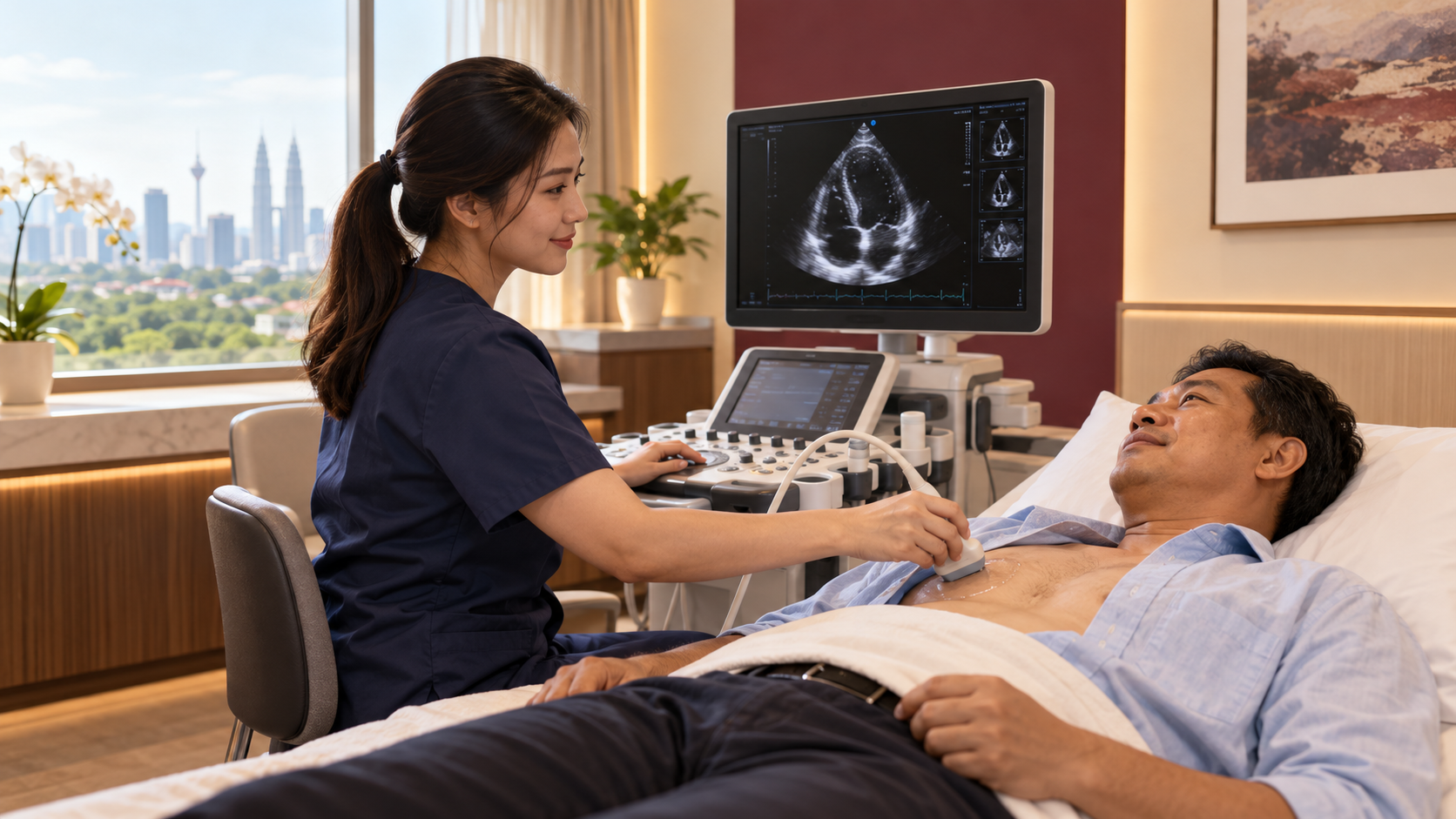
The usual test is a transthoracic echocardiogram (TTE). A clinician moves a small ultrasound probe over gel on your chest to make moving pictures of the heart. Sticky electrodes may record your heart rhythm at the same time. The American Heart Association explains that this test uses sound waves and no X-rays. The British Heart Foundation describes a standard echo as a safe test without scan-related side effects.
A standard echo is not an operation. There is normally no needle or sedative for the external scan. You can ask what kind of echo has been requested before your appointment, because preparation changes if a different technique is planned.
What might feel uncomfortable?
Pressure from the probe may be uncomfortable over a tender area of the chest. The gel may feel cold, and removing the sticky electrodes can briefly pull on the skin. An NHS hospital patient guide notes that a small number of people with sensitive skin may develop a rash from the electrodes. Tell the sonographer if pressure hurts, you have a skin allergy, or you need a short pause. These practical issues are different from harm caused by the ultrasound itself.
What are the risks of an echocardiogram with stress or sedation?
The word “echocardiogram” covers several tests, so the risks depend on which test you have. The NHS explains that a stress echo may involve exercise or medicine to increase the heart rate, while a transoesophageal echo passes a probe down the food pipe. Some scans also use an injected contrast agent. Each additional step has its own precautions. If contrast is used, the team may watch briefly for a reaction; if sedation is used for a transoesophageal test, you may need an escort and should follow the driving instructions provided by the testing centre.
A transoesophageal echo may leave a temporary sore throat. More serious problems are uncommon but possible with an invasive test, so ask the team arranging it for its specific consent information. This article does not mean that Klinik Elysiana offers stress, contrast or transoesophageal echocardiography; confirm the exact service and location before booking.
What should I tell the clinician before the scan?
- Ask whether your booking is for a standard chest echo or another type of test.
- Mention chest tenderness, a known reaction to adhesive or gel, and any concern about lying in one position.
- If an injection, medicine or sedation is planned, ask about allergies, your medicines, fasting, recovery and transport home.
- Ask who will review the images, when the report will be available, and what happens if more tests are needed.
For a routine external scan, the NHS says many people can eat and drink as usual; do not assume this for a different echo. Follow the instructions given for your own appointment.
Can an echo rule out every heart problem?
No. An echo shows heart structure and how the heart moves and pumps, including the valves. A normal result does not explain every symptom or replace all other tests. If symptoms continue, ask the clinician whether an ECG, blood test, further imaging or specialist assessment is needed. Seek urgent medical care for sudden, severe chest pain, fainting or serious breathing difficulty rather than waiting for a routine echo appointment.
Heart ultrasound questions in Rawang
Klinik Elysiana’s English echocardiogram page describes ECG and echocardiogram services. You can contact the clinic to check which type of scan is available, whether a consultation or referral is needed, and how your results will be reviewed. Browse the English health articles for related patient questions.
Sources
- NHS: Echocardiogram (reviewed February 2026)
- American Heart Association: What Is an Echocardiogram?
- British Heart Foundation: Echocardiogram
- Gateshead Health NHS: Echocardiogram patient information
General information for readers in Malaysia. The risks and instructions for your own test should be explained by the clinician arranging it.